

Core assessment: The global construction machinery market entered a new equipment replacement cycle in 2026, but the complexity of procurement decisions is also rising. CE certification, spare parts supply, and training support—these "non-price factors" are becoming the dividing line between reliable suppliers and one-time sellers. For buyers evaluating a construction machinery manufacturer or supplier, understanding total lifecycle cost is more critical than comparing quotations.
Global Construction Machinery Market: Replacement Cycle and Regional Divergence
The global construction machinery market continued its growth trajectory in 2026, driven by three forces: infrastructure investment, mining and energy project expansion, and concentrated replacement of aging equipment. Asia-Pacific remains the largest production and consumption region, with China, India, and Southeast Asia forming the main growth poles. The Middle East, driven by large-scale infrastructure projects, has seen significantly rising demand for heavy construction machinery. North American and European markets are primarily driven by equipment replacement and emissions standard upgrades.
The supply-side landscape is characterized by stratification. Global leaders—Caterpillar, Komatsu, Hitachi Construction Machinery, Volvo Construction Equipment, and others—maintain technological and brand advantages in the high-end market. Chinese construction machinery manufacturers are expanding rapidly in the mid-range market, with clear cost-performance advantages, and are establishing channels along the Belt and Road routes. Indian and Southeast Asian local manufacturers serve regional markets, competing on cost and service responsiveness.
For buyers, market stratification means there is no single best supplier for all scenarios. Mining, municipal construction, agricultural water conservancy, and port logistics have vastly different equipment requirements, and procurement strategy must match specific operating conditions.
Core Dimensions for Evaluating a Construction Machinery Manufacturer
Manufacturing capability and self-production rate. A genuine construction machinery manufacturer should have in-house production capability for core components—structural parts, hydraulic system integration, and electronic control systems. Factories that rely entirely on purchased components for assembly carry structural risks in quality consistency and delivery control. During evaluation, ask whether welding of structural parts, machining, painting, and final assembly are completed in-house, and identify the supply sources for key hydraulic components and engines.
Certification and compliance. Construction machinery with CE certification is a necessary condition for entering the European market, but the scope of certification requires careful verification—is it whole-machine certification or partial component certification? Does the certification cover specific models and configurations? Beyond CE, different markets have their own requirements: EPA emissions certification for North America, China IV emissions standards, and GCC certification for some Middle Eastern countries. Equipment with incomplete certification faces substantive obstacles in customs clearance and registration.
Spare parts supply system. Construction machinery spare parts represent one of the highest proportions of total lifecycle cost. When evaluating a supplier, understand their spare parts warehouse layout, common parts inventory levels, emergency order response times, and whether they provide spare parts catalogues and exploded views. For imported equipment, excessively long spare parts waiting periods are a primary cause of downtime losses.
Training and technical support. The operation and maintenance of construction machinery require professional skills. Suppliers that provide construction machinery training—covering operating standards, routine maintenance, and fault diagnosis—can significantly reduce the buyer's operational risk. Training should not be limited to on-site guidance at delivery but should include systematic course materials and ongoing technical support channels.
Fault diagnosis and after-sales response. Equipment failures are inevitable; the key is response speed. Ask about the supplier's service network distribution, technical personnel allocation, remote diagnosis capabilities, and the specific coverage of warranty terms. For projects in remote areas, service response capability may be more important than equipment price.
Construction Machinery Working Principle: Understanding Equipment to Select Correctly
Construction machinery working principle varies by equipment type, and understanding the fundamentals is a prerequisite for correct selection.
Excavators use hydraulic systems to drive the boom, arm, and bucket to complete digging motions. Core parameters are digging force, bucket capacity, maximum digging depth, and swing speed. Hydraulic system flow and pressure determine motion speed and force, while engine power determines the available energy for the hydraulic system. Selection must match operating conditions: earthwork excavation, mining loading, and demolition work have entirely different equipment requirements.
Loaders rely on hydraulic cylinders to drive the bucket for scooping and lifting, and the travel system for loading and transport. Key parameters are rated load, bucket capacity, breakout force, and tipping load. Loader productivity depends on the loading cycle time, which is directly related to hydraulic system response speed and operator skill.
Cranes achieve lifting operations through hoisting mechanisms, luffing mechanisms, and slewing mechanisms. Core parameters are rated lifting capacity, lifting height, working radius, and lifting moment. Crane safety depends on the reliability of moment limiters and overload protection systems, which must be regularly calibrated and tested.
Rollers apply compaction force to pavement materials through vibrating drums or tires. Vibration frequency, amplitude, and static linear pressure determine compaction effectiveness. Different materials (asphalt, soil, crushed stone) require different compaction parameters, and selection must consider condition matching.
Concrete pump trucks use hydraulic systems to drive piston pumping of concrete, with boom systems for distribution. Key parameters are theoretical output, maximum pumping pressure, and boom vertical/horizontal reach. Pumping height and distance are jointly constrained by concrete slump, pipeline resistance, and pumping pressure.
Construction Machinery Troubleshooting: Common Problems and Diagnostic Approaches
Construction machinery troubleshooting follows the principle of "from simple to complex, from external to internal." Below are several common fault categories and diagnostic directions.
Hydraulic system faults. Common causes of slow or weak operation include: insufficient or contaminated hydraulic oil, clogged filters, pump wear, incorrect relief valve settings, and cylinder internal leakage. During diagnosis, first check oil level and quality, then test system pressure, and finally investigate specific components. Hydraulic oil contamination is the primary cause of hydraulic system failures, and regular oil testing is the most economical preventive measure.
Engine faults. Difficult starting, power loss, and black or blue smoke are common symptoms. Possible causes include: fuel supply problems (clogged filters, air in fuel lines), intake problems (clogged air filters, turbocharger failure), and injection system problems. Electronically controlled engines can read fault codes through diagnostic tools to quickly locate problems.
Electrical system faults. Modern construction machinery relies heavily on electronic control systems. Sensor failures, wiring harness wear, and controller faults can all prevent equipment from operating normally. Diagnosis requires circuit diagrams and diagnostic tools; blind component replacement based on experience is not recommended.
Travel system faults. Track derailment, weak drive, and brake failure are common problems. Causes may include improper track tension, drive motor wear, and brake system faults. Travel system faults are often related to operating habits and maintenance levels.
Structural component faults. Weld cracking, pin wear, and structural deformation are safety hazards requiring attention. Regularly inspect critical welds and pin clearances, address cracks promptly, and avoid structural failure.
Procurement Strategy: New, Used, and Rental
New equipment procurement. Suitable for long-term, high-intensity operations. Advantages are performance guarantees, warranty support, and the latest technology; disadvantages are large capital commitment and rapid depreciation. During procurement, total lifecycle cost (purchase, fuel, maintenance, repair, downtime losses, residual value) should be included in calculations, not just purchase price comparison.
Used construction machinery. Suitable for short-term projects or limited budgets. The core risk is opaque equipment condition. Evaluation should focus on working hours, maintenance records, and key component replacement history, with third-party inspection arranged. For imported used machinery, emissions standards compliance with local regulations must also be confirmed.
Construction machinery rental. Suitable for short project cycles, low equipment utilization, or capital-constrained scenarios. The advantage of rental is no depreciation or long-term maintenance responsibility; the disadvantage is higher unit-time cost and equipment availability constrained by the lessor's inventory. When selecting a lessor, examine their equipment maintenance level and fault response capability.
China Construction Machinery Import and Export
Construction machinery import and export remained active in 2026. China's construction machinery exports continued to grow, mainly flowing to Southeast Asia, Africa, the Middle East, Latin America, and the Russian market. Export products are primarily excavators, loaders, cranes, and rollers, with price competitiveness particularly prominent in the mid-range market.
On the import side, China still has demand for high-end hydraulic components, engines, and electronic control systems, mainly from Japan, Germany, and the United States. Imported equipment still holds a place in mining, large-scale infrastructure, and other scenarios with extremely high reliability requirements.
For traders engaged in import and export, the core challenges are: certification compliance (significant differences in standards across markets), after-sales service (spare parts supply and technical support), and exchange rate and logistics cost volatility. Establishing stable supplier relationships and local service capabilities is the foundation for long-term competition.
Practical Advice for Buyers
Define operating conditions first, then select equipment. Equipment selection should start from operating conditions—material type, workload, site conditions, climate environment—not from brand or price. The same machine can perform very differently under different conditions.
Verify certification scope. Require suppliers to provide original certification certificates and lists of covered models, confirming the certificates are within validity and applicable to the target market.
Evaluate spare parts supply capability. Obtain spare parts catalogues and common parts price lists, and understand local spare parts inventory and service response times. For critical equipment, consider stocking key spare parts.
Invest in training. Operation and maintenance training directly affects equipment life and operating efficiency. Include training in the procurement contract, specifying content, duration, and number of participants.
Establish a fault recording and analysis mechanism. Record equipment fault types, frequency, and handling methods to identify recurring problems. This data is the basis for claims, improvements, and subsequent procurement decisions.
Market Outlook
The global construction machinery market will continue to grow, but growth drivers are shifting from "new construction" to "equipment replacement" and "regional transfer." Electrification, intelligentization, and remote monitoring technologies are changing equipment forms and business models. For buyers, choosing suppliers with technological iteration capability and service commitments safeguards long-term interests better than chasing the lowest quotation.
For manufacturers and suppliers, the competitive frontier has expanded from "product performance" to "full lifecycle support"—spare parts, training, fault response, and technical upgrades. Suppliers that can provide reliable service across this complete chain will hold advantages in the next market cycle.
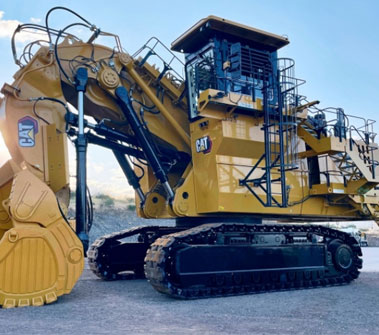 Construction Machinery in 2026
 Construction Machinery Guide:
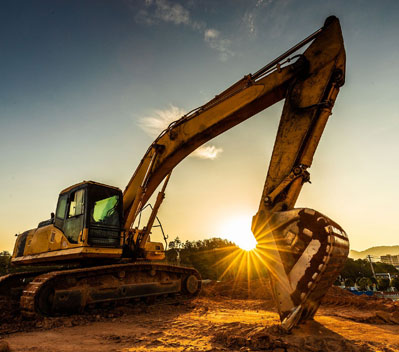 Construction Machinery Sourcin
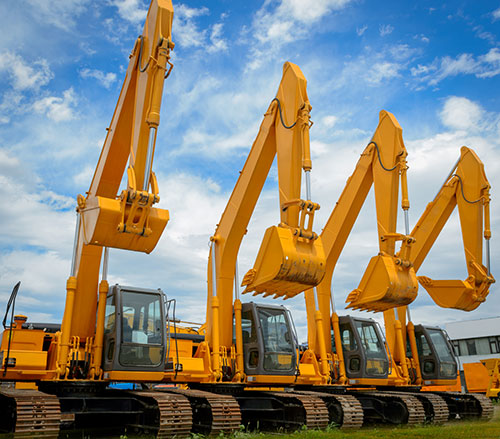 The Complete Guide to Construc